The International Day of Older Persons 2026: BUILDING GERIATRIC NURSING CARE SUPPORT SYSTEMS FOR DIGNITY OF THE HEALTHCARE OLDER PERSONS
THE INTERNATIONAL DAY OF OLDER PERSONS 2026:
BUILDING GERIATRIC NURSING CARE SUPPORT SYSTEMS FOR DIGNITY OF THE HEALTHCARE OLDER PERSONS
DR. RONALD M. KASYABA, Assistant Executive Secretary
SR. CATHERINE NAKIBONEKA, Coordinator Health Training Institutions
Uganda Catholic Medical Bureau, Kampala – Uganda.
In December 1990, the United Nations General Assembly Resolution 45/106 designated 1st October as the International Day of Older Persons—to raise awareness on aging and its societal impacts, including healthcare, to promote the rights of older persons, and to foster intergenerational collaboration—highlighting solidarity between generations and working toward sustainable development goals that benefit all ages. Since that time, Uganda has joined the rest of the World to commemorate this day.
Older persons—according to national policy, are those persons aged 60 years and above—and this population age group is growing in number.
Worldwide, the proportion of older persons is 11% and shall increase to 20% by 2050. In Uganda, the number of older persons has increased from 1.1 million in 2002 to 2.3 million in 2024—accounting for 5% of the population and is projected to increase to 5.5 million (5.7% of the population) by 2050. The 2024 Population Census showed that there was an increase in the proportion of older persons from 4% in 2014 to 5% in 2024.
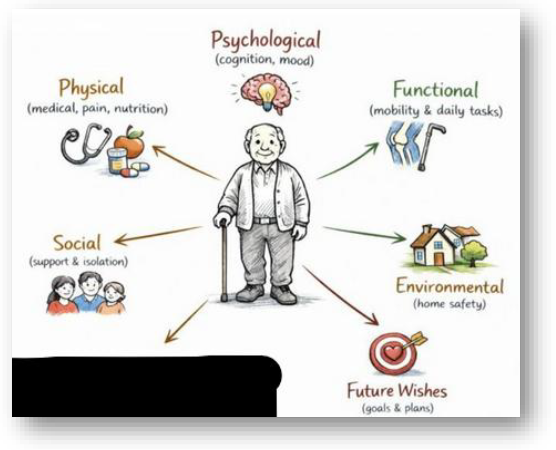
For most persons, the advancement of age comes in mentation changes—the mental state changes—such as alterations in cognitive functions, alertness and dementia, there are also changes mobility, the number of medication combinations increases, and older persons’ physical/mental health is frequently multi-morbid—with at least more than two disease conditions.
As the national population ages, there is a growing need for healthcare professionals with expertise in older age care to address the unique health challenges and concerns that arise in later life. Geriatric nursing care is a specialized field of healthcare that focuses on the care of older adults. Geriatric nurses play a critical role in the care of older adults, providing assessment, intervention, and on-going support to help promote optimal health and wellbeing.
In Uganda, these nursing cadres (geriatric nurses) are not specifically trained in any of the numerous Nurses/Midwifery training schools in Uganda, but the Catholic Church’s (Uganda Catholic Medical Bureau) Network of Health Professionals Training Schools have identified this critically required training need and some few training institutions are providing limited on-site, in-service trainings with basic knowledge and skills for geriatric nursing care—while pursuing support for the development of a national curriculum for geriatric nursing training—to ensure the quality production of these specific cadres.
Geriatric nursing encompasses a range of health care services that are designed to meet the unique needs of the older persons population. Geriatric nurses are responsible for providing comprehensive care to older adults, including assessment, diagnosis, treatment, and evaluation.
The 2002 Madrid International Plan of Action on Ageing focused on mainstreaming older persons in advancing health and well-being into old age, and ensuring enabling and supportive environments—and for this to be achieved—nursing care for older persons must be of quality, effective and appropriate.
Geriatric nursing care requires specialized knowledge and skills—including a strong emphasis on preventative care—to educate patients on healthy lifestyle habits such as exercise, nutrition, and social engagement to prevent the onset
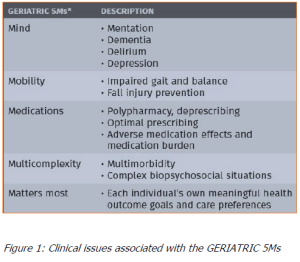
Clinical issues associated with the GERIATRIC 5Ms
of age-related conditions—and the caregivers must have a deep understanding of the physical, social, and
psychological changes that occur in older adults. They must also be able to identify and manage the complex health issues that often accompany aging, such as chronic diseases, cognitive decline, and functional impairments. A key component of geriatric nursing practice is the creation and management of individualized (customised) care plans.
These roles are currently bequeathed to ad-hoc caretakers, house-maids, relatives, family members and /or general nurses—who have lately identified home/’bed-side’ nursing care support services.
The Uganda Catholic Medical Bureau invites, among other stakeholders, the National Council for Older Persons—whose mandate, among others, is to guide, monitor and advise all stakeholders on quality service delivery—including healthcare services, to older persons—to support initiatives to develop and proactively roll-out a national geriatric nursing training curriculum—but also to ensure older persons receive appropriate geriatric nursing care services for optimal dignity in old age sickness.
On the occasion to commemorate the World Day of Older Persons 2026—with the theme of “Aging with Dignity: strengthening care and support systems”, we implore stakeholders to support the
Uganda Catholic Medical Bureau’s initiatives of coordinating and working with the already willing and supportive national systems (Ministry of Health, Ministry of Education) to develop a geriatric nursing care curriculum, support pre and in-service trainings and other support systems for older persons to live with dignity.


