
World Clean Energy Day January 2026 -Clean energy is not just powering facilities- it is powering lives
Clean energy is not just powering facilities- it is powering lives.
By: Kwemboi Silus, WASH and Energy Project Coordinator-
Uganda Catholic Medical Bureau-UCMB
January 26th, the World Clean Energy Day is a moment to reflect on the vital role clean energy plays in strengthening health systems, protecting our common home, and safeguarding the dignity and well-being of communities.
At Uganda Catholic Medical Bureau (UCMB), clean energy is more than a technical solution- it is a foundation for quality, resilient, and compassionate healthcare. Across low- and lower-middle-income countries, nearly 1 billion people are served by health facilities without reliable electricity or with none at all (WHO, 2025), highlighting the global urgency for sustainable energy in health systems.
In Uganda, national surveys show that reliable electricity remains uneven: only about 53 % of health facilities at Health Centre III level and above reported access to electricity 24 hours per day, and in some regions such as Acholi it was as low as 19 %, according to the Harmonized Health Facility Assessment, 2025. This reality significantly limits the ability of health centers to provide safe, uninterrupted services, for instance, maternal care, emergency procedures, diagnostics, and infection control to mention but a few.
To address these gaps and accelerate sustainable electrification, the Ministry of Health is implementing the Health Facility Solar Electrification (HFSE) Project to equip 250 health facilities nationwide with centralized solar energy systems, powering critical equipment including maternity units, laboratories, theatres, and vaccine refrigerators.
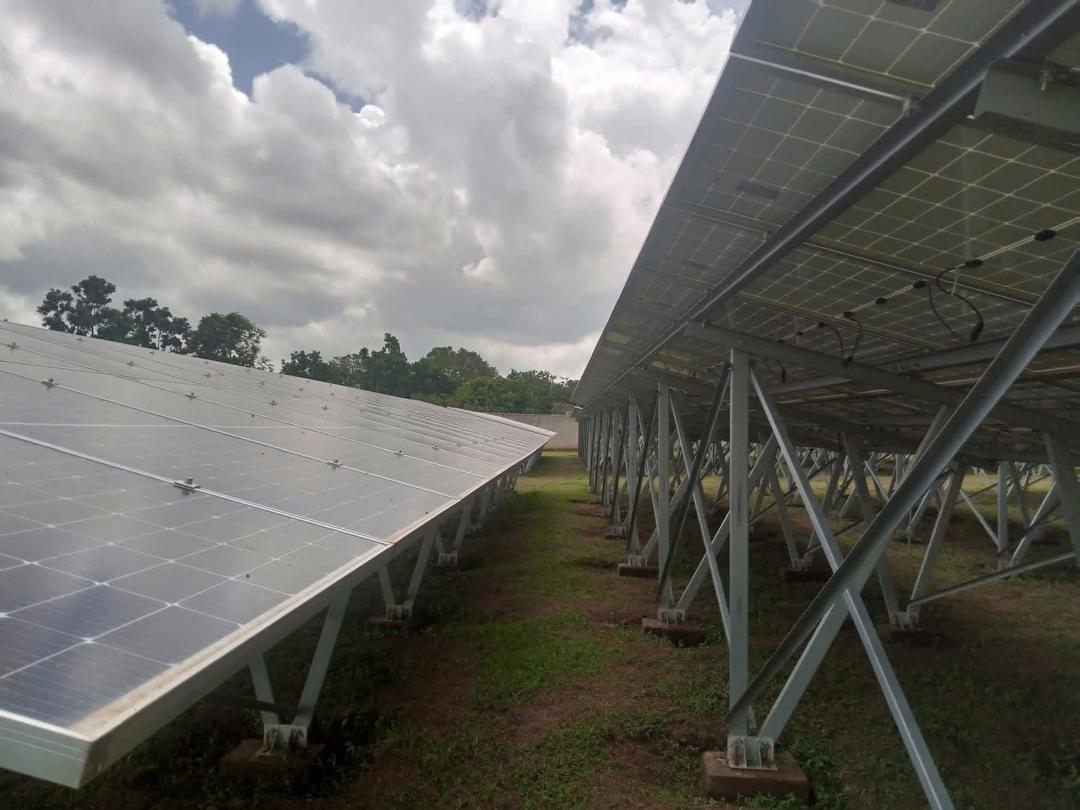
At UCMB, we complement national efforts through targeted WASH & Energy interventions that deploy solar-powered systems to improve reliable electricity, safe water supply, and infection prevention and control in the Catholic health network. These clean energy solutions help reduce outages, strengthen essential service delivery, and improve overall patient and health worker experience.
Our approach also prioritizes capacity building and peer-to-peer learning among technicians and facility teams. By investing in training, shared learning platforms, joint maintenance and local technical networks, we foster sustainability and ownership- ensuring that clean energy and WASH systems are well managed, maintained, and adapted over time.
Our clean energy efforts enable health workers to provide uninterrupted services; from lighting delivery wards during nighttime births to powering oxygen concentrators, cold chains for vaccines, laboratory diagnostics, and water pumping systems. When clean energy is integrated with WASH services, health facilities become more climate-smart, efficient, and environmentally responsible, reducing their carbon footprint while improving quality of care.
This work resonates deeply with the principles of Laudato Si’, which calls for care of our common home and a holistic vision of human development. By advancing renewable energy and strengthening human capacity at the local level, UCMB embraces an “integral ecology”– recognizing that caring for people and the environment are inseparable if we are to achieve sustainable well-being for all.
Together with our valued partners, UCMB’s efforts contribute directly to the Sustainable Development Goals (SDGs)– including SDG 3 (Good Health and Well-Being), SDG 6 (Clean Water and Sanitation), SDG 7 (Affordable and Clean Energy), and SDG 13 (Climate Action).
On this World Clean Energy Day, we reaffirm our commitment to sustainable solutions that strengthen health systems, empower local expertise, and protect future generations.


